Exoskeletons for Walking and Older Adults: What to Know in the UK
Can a walking exoskeleton help an older adult? What consumer exoskeleton legs like Hypershell and DNSYS are (and are not), who they suit, safety questions to ask and why to talk to a GP or physiotherapist first.
Quick facts
Hypershell X Pro S by Hypershell
- Approx. UK price
- £899 · Hypershell UK store
- Available in the UK
- In stock in the UK
- Where to buy
- Amazon UK, uk.hypershell.tech
- Who it's for
- Walkers and day hikers who want an entry-level exoskeleton from a UK store.
- Last checked
- 16 November 2026
Short answer: consumer walking exoskeletons, such as the Hypershell X series and the DNSYS X1, are leisure and fitness devices for people who can already walk on their own. They are not medical devices and they are not walking aids for people who have trouble with balance. Hypershell says users must be able to walk independently and keep their balance without help; DNSYS asks anyone with health issues or physical limitations to consult a healthcare professional first. If you are thinking of one for an older relative, talk to their GP or a physiotherapist before buying.
This guide is based on the manufacturers’ published information. It is not medical advice, and we have not run our own hands-on tests.
What a consumer exoskeleton is
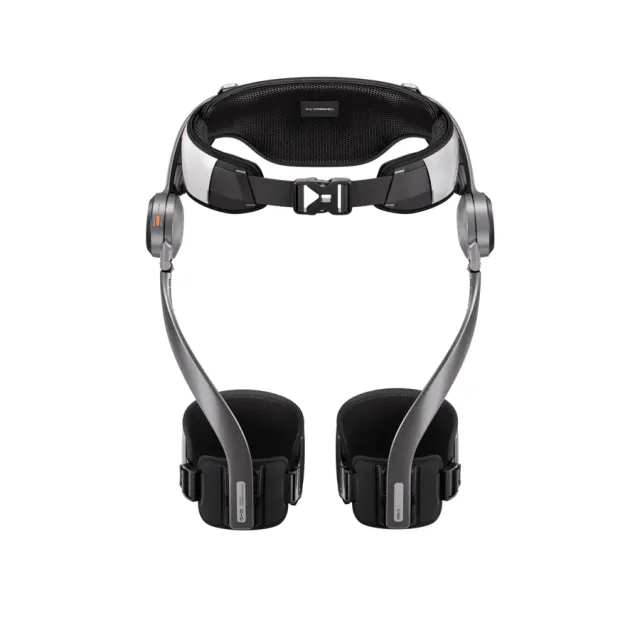
The exoskeleton “legs” sold to consumers in the UK are hip exoskeletons: a belt with a motor unit and two levers strapped to the thighs. Sensors detect how you are walking and the motors add a push to each step. Makers offer modes for walking, stairs, uphill and downhill. Prices start at £899 for the Hypershell X Pro S on Hypershell’s UK store; the DNSYS X1 is sold in US dollars and ships to the UK from abroad.
Who they are designed for
Both makers aim their exoskeletons at active people: hikers, walkers and people who spend long days on their feet outdoors. Their own conditions are clear:
- Hypershell: “not a certified medical device”, designed for people who can walk independently, and requires “the ability to lift your legs and maintain balance without assistance”. Its size guidance says the current models are not suitable for a BMI below 16 or above 34.
- DNSYS: “a mobility aid, not a medical/rehabilitation device”, for people who can walk independently, lift their legs normally and keep their balance. It asks people with underlying health issues, post-surgery recovery or physical limitations to consult a healthcare professional before buying.
Can an older adult use one?
An older adult who walks confidently and keeps their balance unaided falls within the makers’ guidance, and may find one useful for longer walks or hills. Neither maker sets an upper age limit on the pages we checked. But an exoskeleton is not a substitute for a walking stick, frame or rollator, and it is not designed for people who are unsteady on their feet or at risk of falling.
Before buying one for yourself or a relative:
- Ask a GP or physiotherapist. They can say whether it is suitable, especially with joint problems, heart or breathing conditions, after surgery or after a fall.
- Check the fit. Use the maker’s size chart or waist sizes. A device that does not fit can rub or move out of place.
- Practise somewhere safe. Start on flat, familiar ground, with someone nearby.
- Check the returns policy. Hypershell’s UK store offers 14-day returns; DNSYS offers a 14-day money-back guarantee but ships from abroad, so returns take longer.
What an exoskeleton will not do
Consumer exoskeletons do not treat or cure any condition, and makers do not claim they do. They are not rehabilitation devices, they do not prevent falls, and they need charging and setting up through an app. Medical and rehabilitation exoskeletons used in clinics are different, specialist equipment that is fitted and supervised by professionals.
Other robots that help older people
If the goal is to make daily life easier for an older relative, everyday robots such as robot vacuums and window cleaning robots are usually more useful than an exoskeleton. See our guide to robots for elderly care, which compares what they cost.
Frequently asked questions
Are exoskeleton legs available in the UK?
Yes. Hypershell sells its X series from a UK store and on Amazon UK, and DNSYS ships its X1 to the UK from abroad. See every exoskeleton for sale in the UK.
Is a walking exoskeleton a medical device?
The consumer models sold in the UK are not. Both Hypershell and DNSYS say so on their product pages.
Can an exoskeleton help someone who struggles to walk?
The consumer models are designed for people who can already walk and balance unaided. If someone struggles to walk, they should get advice from their GP or a physiotherapist about suitable support.