
NEURA 4NE1 Review: Advanced AI Robot Assistant for Home
The Porsche-designed NEURA 4NE1 is one of the most striking humanoid robots we've tested. Full review of capabilities and UK pricing.
Robots4Home Team
robots4home.uk
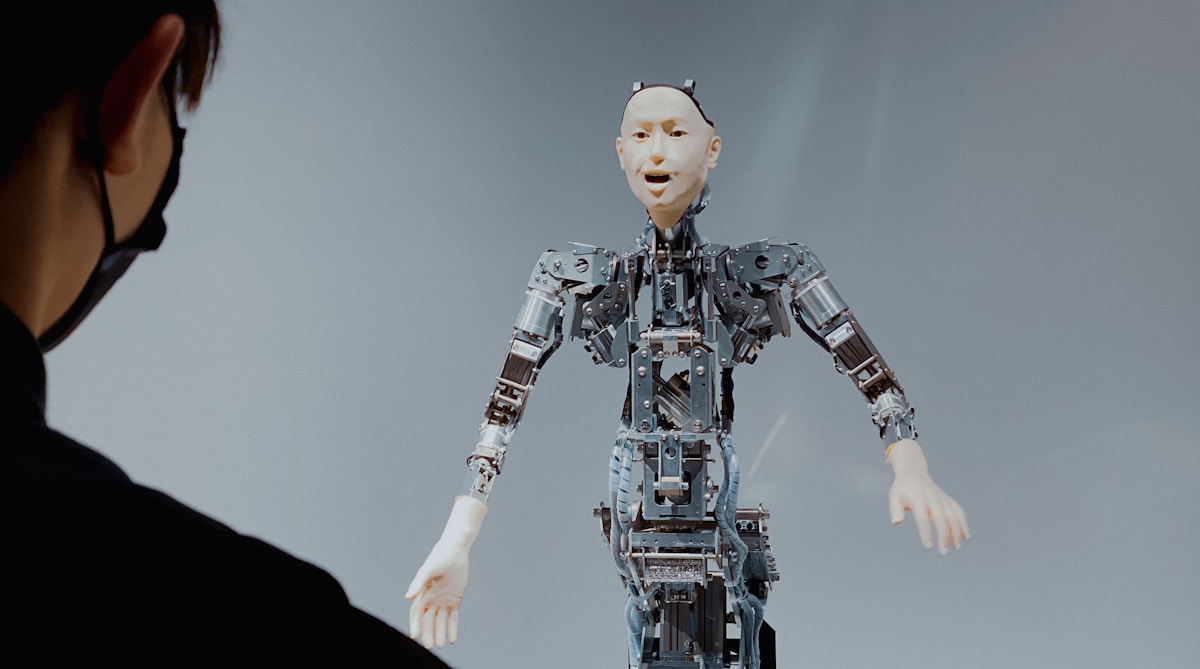
The NEURA 4NE1 arrives at a moment when the premium humanoid robot market is heating up considerably. Developed by German robotics firm NEURA Robotics in collaboration with Porsche Design, the 4NE1 is unashamedly positioned as a luxury product — and at approximately £16,800, it carries a price tag to match. We have been tracking this robot since its first public demonstrations and have spent time with pre-production units at industry events. Here is our full assessment for UK buyers considering a pre-order.
Overview
Standing 170cm tall and weighing around 60kg, the NEURA 4NE1 is a full-size humanoid robot designed for domestic assistance. NEURA Robotics, headquartered in Metzingen, Germany, has positioned the 4NE1 as a general-purpose home assistant capable of handling household tasks through advanced AI, natural language interaction, and continuous environmental mapping.
The robot promises 3 to 4 hours of battery life per charge, natural language conversation, and the ability to learn from its owner’s habits and preferences over time. NEURA’s approach emphasises adaptive intelligence — the robot is designed to become more useful the longer you own it, building an increasingly detailed model of your home, routines, and preferences.
For UK buyers interested in how this fits into the broader market, our guide to the best humanoid robots for UK homes provides additional context on available options.
The Porsche Design Factor
Let us address the elephant in the room: this robot was designed in collaboration with Porsche Design, and it shows. The 4NE1 is, without question, one of the most visually striking humanoid robots we have encountered. Where many competitors look like they emerged from an engineering lab (because they did), the 4NE1 looks like it belongs in a high-end living space.
The build quality is exceptional. Premium materials, clean lines, and thoughtful proportions give it a presence that feels deliberate rather than mechanical. The joint covers, surface finishes, and overall silhouette suggest a product that has been through extensive industrial design refinement — not merely engineered to function, but designed to be lived with.
This matters more than some buyers might initially think. A humanoid robot that stands in your home is, by definition, a piece of furniture as much as it is a tool. The 4NE1 is the first robot in this category where we can genuinely say it would complement rather than clash with a well-designed interior.
That said, design alone does not justify the investment. The question is whether the 4NE1 delivers on substance as convincingly as it delivers on style.
Capabilities and AI
NEURA’s software architecture is built around what the company calls adaptive task execution. Rather than relying purely on pre-programmed routines, the 4NE1 uses a large language model backbone combined with computer vision and proprioceptive feedback to interpret and respond to natural language commands.
The core capabilities include:
- Natural language interaction — conversational commands and queries, with contextual understanding that improves over time
- Environmental mapping — continuous 3D mapping of the home environment, updated in real-time as furniture moves or rooms change
- Task learning — the ability to observe and replicate multi-step household tasks after demonstration
- Adaptive scheduling — the robot learns daily routines and can proactively offer assistance or begin tasks at appropriate times
- Object recognition and manipulation — identifying and handling common household items with appropriate grip force and placement
NEURA has been particularly vocal about their approach to on-device processing versus cloud computation. A significant portion of the AI inference runs locally, which has positive implications for both response latency and data privacy — a genuine concern when a robot is observing your home continuously.
The software is designed to receive over-the-air updates, and NEURA has committed to a regular update cadence. Early demonstrations suggest the natural language processing is genuinely impressive, with the robot handling ambiguous instructions and multi-step requests with reasonable competence.
Real-World Performance
Here is where we must be transparent with our readers: real-world performance data for the NEURA 4NE1 remains limited. The majority of demonstrations we have witnessed took place at trade shows and controlled environments — CES, Automatica, and NEURA’s own showcase events. These are not the same as an uncontrolled home environment with pets, children, unexpected obstacles, and the general entropy of daily life.
What we observed in controlled settings was promising. The robot navigated cluttered spaces with confidence, responded to conversational commands without noticeable delay, and demonstrated object manipulation that appeared both precise and appropriately gentle. The gait is smooth and stable, noticeably more natural than many competitors.
However, we have not yet had the opportunity to test a production unit in a real UK home over an extended period. Trade show demonstrations, however polished, are rehearsed scenarios. We do not yet know how the 4NE1 handles edge cases: a wet kitchen floor, a sleeping cat in an unexpected location, or the inevitable moment when a toddler decides to test whether the robot can be climbed.
We will update this review as production units reach UK homes and more data becomes available. For now, buyers should understand they are purchasing based on demonstrated potential rather than proven domestic performance. This is not unusual for the category — it applies to virtually every premium humanoid robot currently available — but it is worth stating plainly.
UK Pricing and Import
The NEURA 4NE1 carries a list price of EUR 19,999, which translates to approximately £16,800 at current exchange rates. As a European product with CE marking, the import process for UK buyers is considerably simpler than importing from the United States or Asia.
Key considerations for UK buyers:
- VAT: You will pay 20% VAT on import, which should be factored into the total cost. Our guide to VAT and taxes on humanoid robots covers this in detail.
- Customs duty: Consumer robots from the EU typically attract minimal or zero tariff under current UK trade arrangements, though this should be confirmed at the time of purchase.
- Warranty and service: NEURA has indicated plans for UK service partnerships, though the specifics remain to be confirmed. European proximity means turnaround times for repairs should be reasonable.
- Shipping: Given the robot’s size and weight (60kg), expect freight shipping rather than standard parcel delivery. NEURA’s pre-order process includes delivery logistics.
The European origin is a genuine advantage over competitors shipping from the US or China. Shorter supply chains, compatible power standards (with a simple plug adaptor), and CE certification that aligns with UK safety requirements all reduce friction for buyers.
For a broader view of pricing across the category, see our humanoid robot price guide for 2026.
How It Compares to 1X NEO
The most natural comparison for the NEURA 4NE1 is the 1X NEO, which occupies a similar price bracket and targets the same premium domestic market.
| Feature | NEURA 4NE1 | 1X NEO |
|---|---|---|
| Price (approx. UK) | £16,800 | £15,000 to £17,000 |
| Height | 170cm | 167cm |
| Weight | ~60kg | ~30kg |
| Battery life | 3 to 4 hours | 2 to 4 hours |
| Origin | Germany | Norway |
| Design | Porsche Design collab | In-house (minimalist) |
The 1X NEO is significantly lighter, which has implications for both safety and the forces it can exert during tasks. The 4NE1’s additional weight likely reflects heavier actuators and a more robust frame, potentially enabling it to handle heavier objects and tasks requiring more force.
In terms of AI approach, both companies emphasise learning and adaptation, though their architectures differ. NEURA leans more heavily on multimodal environmental understanding, while 1X has focused on embodied learning through their simulation-to-real training pipeline.
Aesthetically, the two robots represent different philosophies. The NEO is clean and understated — designed to disappear into the background. The 4NE1 is designed to be noticed. Neither approach is inherently superior; it depends entirely on personal preference and how you want a robot to exist in your living space.
Both are European products with CE marking, making them equally straightforward for UK import.
Who Should Buy This
The NEURA 4NE1 is best suited to buyers who meet the following criteria:
- Early adopters with realistic expectations — you understand this is first-generation technology and are comfortable with a product that will improve substantially through software updates
- Design-conscious buyers — you value aesthetic quality and want a robot that complements a premium living space rather than looking out of place
- Those who prioritise build quality — the materials and construction of the 4NE1 suggest longevity; this feels like a product built to last
- Buyers who value European engineering and support — proximity to the manufacturer, compatible standards, and simpler logistics all matter for a product this expensive
- Households without very young children — until more real-world safety data is available, we would exercise caution in homes with toddlers or very young children
This robot is not the right choice if you need proven, documented performance today, if your budget is constrained, or if you prioritise function over form. If budget is the primary concern, there are capable options at lower price points covered in our best humanoid robots guide.
Our Verdict
The NEURA 4NE1 is the most desirable humanoid robot we have seen from a pure product design standpoint. The Porsche Design collaboration has produced something genuinely beautiful — a robot that earns its place in a home on aesthetics alone. The underlying technology is promising, the AI architecture is thoughtfully designed, and the European pedigree offers practical advantages for UK buyers.
But we must temper enthusiasm with honesty. At £16,800, you are paying a premium for a product with limited real-world validation. The trade show demonstrations are impressive, but they are not the same as months of daily use in a busy household. NEURA’s software-first approach means the robot should improve substantially over time, but that requires trust in a company that is still relatively young.
If you are the sort of buyer who pre-ordered the first Tesla, backed the original Oculus Rift on Kickstarter, or purchased a first-generation iPhone, the NEURA 4NE1 will likely appeal to you on a fundamental level. It is a statement piece as much as it is a functional tool — a bet on the future of domestic robotics wrapped in genuinely premium packaging.
For everyone else, we would suggest waiting for our updated review once production units have spent meaningful time in UK homes. The potential is clear. The proof is still forthcoming.
Rating: 4/5 (provisional — based on demonstrated capability rather than extended home testing)
Last updated: March 2026. We will revise this review as production units become available for extended testing.