
Humanoid Robot Regulations in the UK: Legal & Safety Standards
UK legal requirements for owning and operating humanoid robots at home. CE/UKCA marking, product safety, insurance, and liability.
Robots4Home Team
robots4home.uk
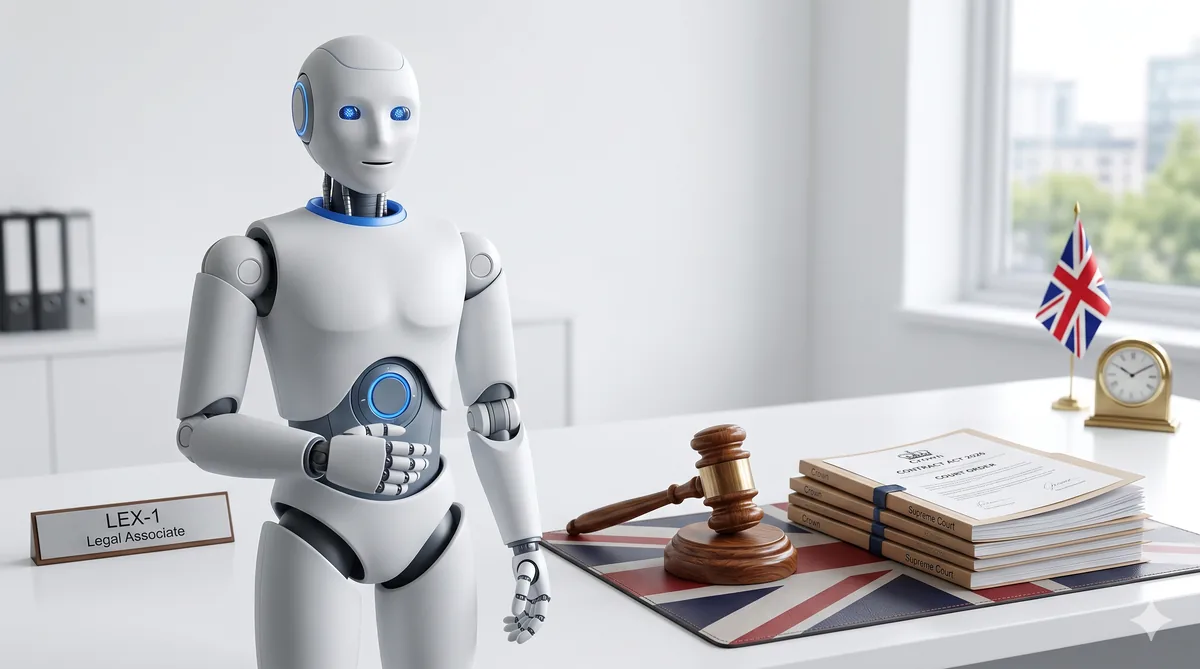
Disclaimer: We are not lawyers and this article does not constitute legal advice. The information below is intended as a general overview for UK consumers. For advice on your specific situation, consult a qualified solicitor.
As humanoid robots move from showrooms into living rooms, one of the most common questions we hear is: “What are the actual legal rules around owning one?” The honest answer is that the UK does not yet have specific legislation governing domestic humanoid robots. Instead, your robot falls under a patchwork of existing product safety, liability, data protection, and consumer law — and navigating it all can feel a bit daunting.
We’ve put together this guide to help you understand where things stand in 2026, what your responsibilities are as an owner, and what changes may be coming. If you’re also looking into the practicalities of getting a robot into the country, our importing humanoid robots to the UK guide covers customs, duties, and shipping.
There Is No “Robot Law” — Yet
The UK has no standalone legislation dedicated to domestic robots. Unlike autonomous vehicles, which now have their own regulatory framework, humanoid robots used in the home are governed by general product safety and consumer protection rules. This means your robot is treated much like any other consumer electronic product — a sophisticated one, certainly, but not legally distinct from a washing machine or a smart speaker in the eyes of the law.
The key pieces of legislation that currently apply include:
- General Product Safety Regulations 2005 — requires that all consumer products placed on the UK market are safe for their intended use.
- Consumer Rights Act 2015 — gives you rights if a product is faulty, not as described, or not fit for purpose. This applies fully to humanoid robots purchased from UK-based sellers.
- Supply of Machinery (Safety) Regulations 2008 — may apply to robots with mechanical moving parts, setting essential health and safety requirements.
If your robot arrives faulty or causes harm due to a manufacturing defect, these existing frameworks protect you. But they were written long before a walking, AI-powered machine could share your kitchen, and there are genuine grey areas.
CE Marking, UKCA Marking, and Product Compliance
Since Brexit, the UK has its own product conformity marking: the UKCA (UK Conformity Assessed) mark. In theory, products sold in Great Britain need UKCA marking rather than the EU’s CE mark. In practice, the government has repeatedly extended transitional arrangements, and as of 2026, CE-marked products remain accepted on the UK market for most product categories.
What this means for robot buyers: a humanoid robot bearing a valid CE mark from an EU or international manufacturer can legally be sold and used in the UK. If you’re importing a robot directly, check that it carries at least CE certification for electromagnetic compatibility (EMC) and relevant safety directives. UKCA-only marking is still relatively uncommon for robotics products given the global nature of the market.
If you’re buying from a UK-based retailer or authorised distributor, compliance should already be handled for you — but it’s worth confirming before purchase.
Liability: Who Pays When a Robot Causes Damage?
This is where things get genuinely complicated. If your humanoid robot knocks over a vase, trips a visitor, or damages property, the question of liability depends on why the incident happened.
Manufacturer liability applies under the Consumer Protection Act 1987 if the robot caused harm due to a defect in its design, manufacture, or instructions. You would not need to prove negligence — only that the product was defective and caused the damage. This is strict liability, and it sits with the manufacturer or the importer who placed the product on the UK market.
Owner liability may apply if the damage resulted from your own negligence — for example, operating the robot in a way that contradicts the manufacturer’s safety guidance, disabling safety features, or failing to supervise it around vulnerable people when supervision was clearly necessary.
The grey area lies with AI decision-making. If a robot’s autonomous behaviour causes an accident and neither the owner nor the manufacturer did anything obviously wrong, existing UK law struggles to assign blame cleanly. This is one of the areas where future legislation will almost certainly need to catch up. For now, the practical advice is straightforward: follow manufacturer guidelines, keep safety systems enabled, and supervise your robot during tasks that involve physical interaction with people or fragile items. For a deeper look at safe operation, see our humanoid robot safety guide.
Insurance: Protecting Yourself
Standard UK home insurance policies typically cover damage caused by household appliances and electronics. However, a humanoid robot that walks autonomously around your home is a step beyond a Roomba, and we strongly recommend checking your specific policy before assuming you’re covered.
Key questions to ask your insurer:
- Does your contents policy cover the robot itself against theft, accidental damage, or fire?
- Does your liability cover extend to injuries or damage caused by an autonomous device?
- Are there exclusions for AI-controlled or self-navigating equipment?
Some insurers are now offering specialist technology or robotics add-ons. Early estimates suggest dedicated robot liability cover runs approximately £10–25 per month, depending on the robot’s value and capabilities. Given that many home robots cost upwards of several thousand pounds — see our best humanoid robots for home UK guide for current pricing — the insurance cost is a sensible part of your overall budget.
We also cover warranty and after-sales support in our warranty and support guide, which is worth reading alongside your insurance considerations.
Data Protection and Privacy (GDPR)
Most humanoid robots come equipped with cameras, microphones, and sometimes LIDAR sensors. Under UK GDPR and the Data Protection Act 2018, this matters — particularly if your robot captures images or audio of other people.
If your robot operates solely inside your own home and processes data only for personal or household purposes, the domestic exemption in data protection law generally applies. You are not acting as a data controller in the regulatory sense.
However, if your robot’s cameras or microphones capture footage of people outside your property — neighbours, passers-by, delivery drivers — the situation shifts. You may have obligations under data protection law, similar to those that apply to domestic CCTV systems. The Information Commissioner’s Office (ICO) guidance on domestic CCTV is a useful reference point.
Practical steps:
- Check what data your robot collects and where it is stored or transmitted.
- If your robot has an outdoor-facing mode, be aware of your obligations.
- Review the manufacturer’s privacy policy, particularly around cloud-based processing of audio and video.
- If visitors ask about the robot’s cameras, be transparent.
Noise Regulations
Humanoid robots generate operational noise — servo motors, actuators, fans, and footstep impacts on hard floors. While current consumer models are not excessively loud (typically 40–55 dB during movement), noise becomes a genuine consideration if you live in a flat or terraced house.
UK noise nuisance law doesn’t set a specific decibel limit for domestic equipment. Instead, local councils assess complaints based on whether the noise constitutes a “statutory nuisance” — persistent or unreasonable disturbance. A robot performing tasks at 3 a.m. with audible motor noise could, in theory, attract a complaint.
Common-sense steps: schedule noisy tasks during reasonable hours, use the robot’s quiet or low-power mode if available, and consider soft flooring or pads under the charging station to reduce vibration transfer to neighbours below. Our guide to energy costs and charging covers scheduling and off-peak operation, which helps with noise management too.
Planning Permission
You do not need planning permission to own or operate a humanoid robot inside your home. However, if you plan to install an external charging station — particularly one with a dedicated electrical supply or a visible external structure — you may need to check your local planning rules, much as you would for an EV charging point.
In most cases, a domestic charging station installed on your property will fall under permitted development rights. But if you live in a listed building, conservation area, or leasehold flat with restrictive covenants, it’s worth checking before you install anything permanent.
The Automated Vehicles Act and Future Robot Regulation
The Automated Vehicles Act 2024 established a legal framework for self-driving cars on UK roads, including provisions around liability, insurance, and data sharing. While it does not cover domestic robots directly, it signals the direction of travel for UK policy on autonomous systems.
The Law Commission has separately considered the broader question of how UK law should handle robots and AI-driven systems. Industry observers expect some form of dedicated robot regulation within the next few years — potentially covering product registration, mandatory safety features, and clearer liability rules for autonomous behaviour.
For now, the practical impact on home robot owners is limited. But if you’re making a significant investment in a humanoid robot, it’s worth staying aware that the regulatory landscape is likely to evolve.
Robots in Shared Spaces: Flats and Communal Areas
If you live in a flat or a property with shared communal spaces, operating a humanoid robot raises additional considerations:
- Leasehold agreements may restrict the use of autonomous devices in communal hallways, lifts, or gardens. Check your lease or speak with your freeholder or management company.
- Other residents may have concerns about a robot moving through shared spaces, particularly around cameras and microphones. Being transparent and considerate goes a long way.
- Access and safety — a robot navigating a communal stairwell or corridor could present trip hazards to other residents, especially elderly neighbours. Most current robots are designed for indoor, single-household use and should not be left to roam shared areas unsupervised.
Children, Vulnerable People, and Duty of Care
If children or vulnerable adults live in or regularly visit your home, you have a heightened duty of care. A humanoid robot is a moving machine with significant weight — even the lighter models weigh 12–30 kg — and any collision with a small child could cause injury.
Practical guidance:
- Never leave young children unsupervised with an active humanoid robot.
- Enable child-safety modes if your robot offers them (reduced speed, limited range of motion, restricted operating zones).
- Ensure emergency stop buttons or voice commands are accessible and understood by all household members.
- For elderly users, ensure the robot’s movements are predictable and that fall risks are minimised — particularly if the robot is being used for elderly care support.
Manufacturers have a responsibility to design robots that are safe for foreseeable domestic use, including homes with children. But as an owner, you share that responsibility through proper supervision and configuration.
What Happens if Your Robot Injures Someone?
If your humanoid robot causes injury to another person — a visitor, a neighbour, a tradesperson — the legal process broadly follows existing personal injury law:
- Immediate response: Ensure the injured person receives appropriate medical attention. Document what happened, including the robot’s activity at the time and any error messages or unusual behaviour.
- Manufacturer vs owner liability: As discussed above, the question is whether the injury resulted from a product defect (manufacturer’s responsibility) or from the owner’s use of the product (your responsibility).
- Insurance claim: Contact your home insurer promptly. If you have specialist robot liability cover, notify that insurer as well.
- Legal advice: For any serious injury, seek legal advice early. The interaction between product liability, negligence, and emerging AI law is genuinely complex, and a solicitor experienced in product liability will be essential.
It is also worth preserving any log data from the robot. Most modern humanoid robots record operational logs, sensor data, and decision histories. This data could be critical in establishing what happened and why.
Summary: What UK Robot Owners Need to Know
The regulatory picture for UK home robot owners in 2026 is workable, if imperfect. There is no dedicated robot law, but existing product safety, consumer protection, and data privacy frameworks provide a reasonable baseline. Here are the essentials:
- Your robot must be CE or UKCA marked and compliant with UK product safety regulations.
- Manufacturers bear strict liability for defective products; owners are responsible for safe and reasonable use.
- Check your home insurance and consider specialist robot liability cover (approximately £10–25/month).
- Be mindful of data protection — cameras and microphones have GDPR implications.
- Supervise your robot around children, elderly people, and visitors.
- Keep records — operational logs, purchase receipts, and warranty documentation.
- Stay informed — regulation in this area is evolving, and new rules are likely within the next few years.
Owning a humanoid robot in the UK is entirely legal and, provided you take sensible precautions, straightforward from a regulatory standpoint. The law will inevitably catch up with the technology — but for now, common sense, good insurance, and responsible ownership will serve you well.
This article was last reviewed in March 2026. Regulations may have changed since publication. For current legal advice, consult a qualified solicitor.