
Cheapest Humanoid Robot for the Home in 2026: Every Option Ranked by Price
Looking for the cheapest humanoid robot for your home? We rank every model available to UK buyers by price, from £1,100 to £24,000, with honest advice on what you actually get.
Robots4Home Team
robots4home.uk
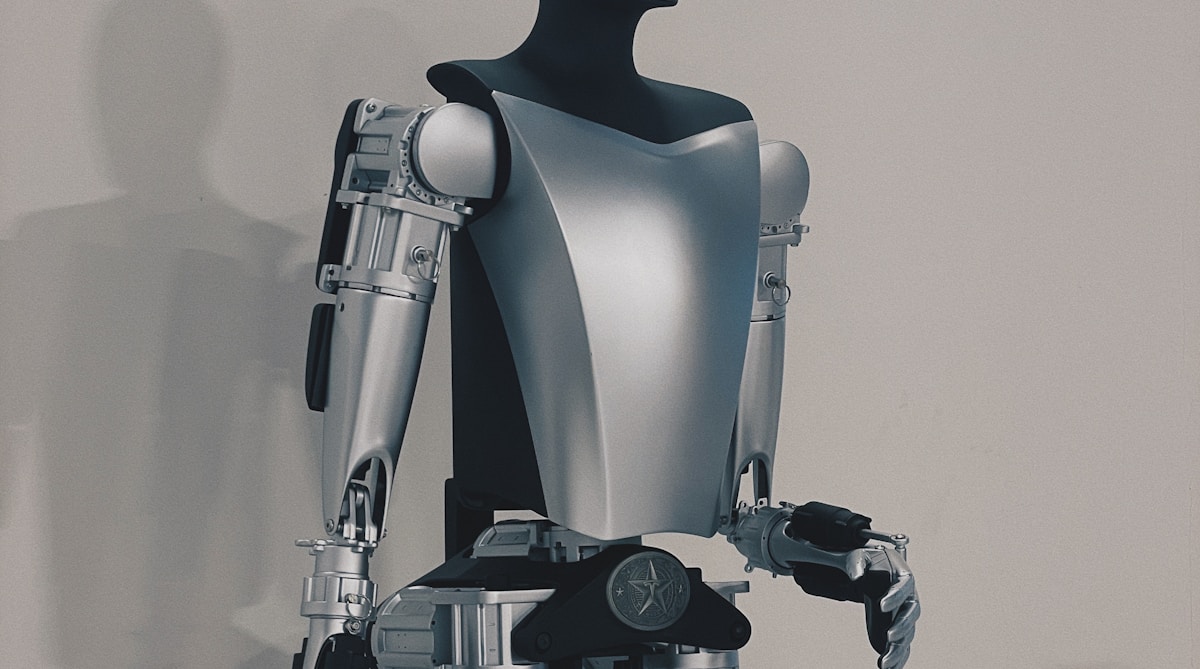
Let’s be upfront: the cheapest humanoid robot for your home still costs more than a decent used car. The term “budget” in this market means something very different from what most people expect. But if you’ve done your research and you’re ready to bring a humanoid robot into your home, we’ve ranked every option available to UK buyers from cheapest to most expensive — with honest assessments of what you get at each price point.
We’ve included UK prices with 20% VAT calculated, because the sticker prices you see on manufacturer websites almost never reflect what you’ll actually pay. Shipping is extra on top.
Quick-Pick Table: Cheapest to Most Expensive
| Rank | Robot | UK Price (inc. VAT) | Height / Weight | Best For | Available Now? |
|---|---|---|---|---|---|
| 1 | NOETIX Bumi | £1,100 | 94cm / 12kg | Education, companion | Yes |
| 2 | Unitree R1 | £3,900 | 123cm / 29kg | Best value all-rounder | Yes |
| 3 | Unitree G1 | £10,800–£12,800 | 127cm / 35kg | Capable mid-range | Yes |
| 4 | 1X NEO | £16,000 | 165cm / 30kg | Best home assistant | Shipping 2026 |
| 5 | NEURA 4NE1 | £16,800 | 170cm / ~60kg | Premium design | Pre-order |
| 6 | Unitree H2 | £23,900 | 180cm / 47kg | Professional grade | Yes |
| 7 | Tesla Optimus | £16,000–£24,000 | 173cm / 57kg | N/A — not available | 2027+ |
All prices include 20% VAT. Shipping adds £80–500 depending on size and courier. See our full UK pricing breakdown for detailed calculations.
What Does “Cheap” Actually Mean in Humanoid Robotics?
Before we go any further, we need to calibrate expectations. The humanoid robot market in 2026 is roughly where the personal computer market was in the early 1980s — genuinely transformative technology, but priced for enthusiasts and early adopters rather than mainstream consumers.
The cheapest humanoid robot you can buy today — the NOETIX Bumi at £1,100 — costs more than a flagship smartphone. The cheapest model we’d recommend for meaningful home tasks — the Unitree R1 at £3,900 — costs more than many people spend on a holiday. And the most capable home robot — the 1X NEO at £16,000 — sits in used car territory.
None of these are impulse purchases. But prices have fallen dramatically in the past eighteen months, and the trend is firmly downward. Two years ago, anything under £50,000 was genuinely budget. Now there are real options under £5,000, and that shift matters.
Every Robot Ranked by Price
1. NOETIX Bumi — £1,100 (Cheapest Available)
The Bumi is the cheapest humanoid robot you can buy and have walking around your home in 2026. At 94cm tall and just 12kg, it’s roughly the size of a toddler, and that’s a useful way to think about its capabilities too.
What you get for £1,100: A fully bipedal walking robot with face recognition, voice commands, object recognition, and enough processing power for basic interaction. It dances, it follows you around, and it can recognise family members. It ships with an educational programming platform that makes it genuinely useful for teaching robotics concepts.
What you don’t get: Any meaningful household help. The Bumi cannot carry objects of useful weight, reach countertops, open doors, or perform domestic tasks. It’s a companion and educational platform, not a home assistant.
Who should buy it: Families interested in robotics education, hobbyists who want to programme a bipedal robot, or anyone curious about humanoid robots without committing five figures. It’s also a reasonable option as a companion for older children.
Our honest take: At £1,100, the Bumi is remarkably good for what it is. Just be clear about what it is — a small, engaging robotics platform, not a domestic helper.
Check current Bumi pricing →{:target=“_blank” rel=“nofollow sponsored”}
2. Unitree R1 — £3,900 (Best Value)
The R1 is where things get genuinely exciting on a budget. At £3,900, it’s the cheapest humanoid robot we’d recommend if you want something that moves with real agility and demonstrates what modern robotics can do.
What you get for £3,900: The most athletic robot anywhere near this price. The R1 can run, perform cartwheels, recover from falls, navigate autonomously, and perform basic object manipulation. Standing 123cm tall and weighing 29kg, it’s substantial enough to interact meaningfully with your home environment.
What you don’t get: Fine manipulation skills. The R1’s strength is locomotion, not dexterous handling of household objects. It won’t fold your laundry or load the dishwasher — at least not yet. Software updates are improving this, but it’s not its primary capability today.
Who should buy it: Anyone who wants the most impressive humanoid robot for the least money. Enthusiasts, early adopters, and buyers who are comfortable that the practical home applications are still developing. If you’re buying on a relative budget and want to be amazed by what your robot can physically do, this is the one.
Our honest take: The R1 offers extraordinary value. The gap between what it costs and what it can do physically is remarkable. Its limitation is on the software and manipulation side, not the hardware.
Check current R1 pricing →{:target=“_blank” rel=“nofollow sponsored”} | Buy on Amazon UK
3. Unitree G1 — £10,800–£12,800 (Mid-Range)
Moving into five-figure territory, the G1 bridges the gap between the R1’s athletic showcase and genuinely capable home interaction.
What you get: Everything the R1 offers, plus improved sensors, more sophisticated object manipulation, a more advanced AI stack, and better awareness of cluttered home environments. At 127cm and 35kg, it handles objects with noticeably more confidence than its cheaper sibling.
What you don’t get: Full autonomy for household tasks. The G1 still benefits from supervision for most practical work. It’s clearly more capable than the R1 for home use, but the jump from £3,900 to £10,800+ is steep for an incremental improvement.
Who should buy it: Buyers who need more than a mobility platform but aren’t ready for the premium tier. Developers and researchers who want a more capable manipulation platform than the R1 provides.
Check current G1 pricing →{:target=“_blank” rel=“nofollow sponsored”}
4. 1X NEO — £16,000 (Best Home Robot)
The NEO is the first humanoid robot designed specifically for home life, not adapted from an industrial or research platform. Backed by OpenAI, it’s the most capable domestic humanoid you can order today.
What you get: A 165cm robot that folds laundry, tidies rooms, organises shelves, opens doors, fetches items, and follows scheduled daily routines through a companion app. At 30kg, it’s surprisingly light for its height, and its movements are deliberately gentle — an important consideration in a family home.
What you don’t get: Full independence. The NEO uses teleoperator assistance for complex or novel tasks, and most demonstration videos are staged in controlled settings. It’s a powerful assistant that sometimes needs human guidance, not a self-sufficient butler.
Who should buy it: Buyers who want a robot that actually helps around the house today, and who can absorb the £16,000 price tag. Particularly compelling for elderly care applications where scheduled routines and gentle physical assistance have real daily value.
Check current NEO pricing →{:target=“_blank” rel=“nofollow sponsored”}
5. NEURA 4NE1 — £16,800 (Premium Design)
The Porsche-designed 4NE1 is the most visually striking humanoid robot on the market, and its build quality reflects that pedigree. At 170cm and roughly 60kg, it has a physical presence that none of the other robots here can match.
What you get: Advanced AI-driven task execution, natural language interaction, environmental mapping, and household capabilities, wrapped in genuinely premium industrial design. NEURA’s platform learns from your interactions over time.
What you don’t get: Extensive real-world user data. Most 4NE1 demonstrations have been at trade shows rather than in living rooms. At £16,800, that’s a lot to spend on a robot with limited home-use track record.
Who should buy it: Design-conscious buyers who value aesthetics alongside functionality and are comfortable being early adopters. The European origin (NEURA is German) also means potentially simpler import logistics for UK buyers.
Check current 4NE1 pricing →{:target=“_blank” rel=“nofollow sponsored”}
6. Unitree H2 — £23,900 (Professional Grade)
At the top end, the H2 is the most physically capable humanoid robot available to consumers. At 180cm and 47kg, it’s full adult-sized and built for heavy-duty applications.
What you get: Superior payload capacity, robust navigation in complex environments, extended operational endurance, and the ability to handle tasks that smaller robots simply cannot manage. The build quality is industrial-grade.
What you don’t get: Software tuned for home life. The H2’s firmware leans towards industrial and professional applications, and its size makes it less suitable for typical UK homes — especially smaller flats and terraced houses.
Who should buy it: Buyers with larger properties who want the most physically capable humanoid available, or those with specific professional needs. For most home buyers, the money is better spent elsewhere on this list.
Check current H2 pricing →{:target=“_blank” rel=“nofollow sponsored”}
7. Tesla Optimus — £16,000–£24,000 (Not Available)
We include the Optimus for completeness because it dominates search results, but we want to be clear: you cannot buy a Tesla Optimus for your home in 2026. Tesla is manufacturing units for its own factories and has indicated consumer availability no earlier than 2027.
The projected price range of £16,000–£24,000 could make it competitive with the NEO and 4NE1, and Tesla’s manufacturing scale might eventually push prices lower than anyone else can match. But projected prices for unavailable products are just speculation.
Our honest take: Don’t wait for the Optimus. If you want a home robot in 2026, buy one that exists today. If the Optimus launches in 2027 and meets its targets, it will be worth evaluating then.
The True Cost of Ownership: Beyond the Sticker Price
The purchase price is only the beginning. Here’s what ongoing ownership looks like.
Electricity
Good news: humanoid robots are surprisingly cheap to run. Most models draw between 200W and 600W while active, and spend significant time on low-power standby. Based on current UK electricity rates (approximately 24.5p per kWh on the Ofgem cap), expect to add roughly £3–8 per month to your electricity bill for typical home use — less than running a tumble dryer once a week. We cover this in detail in our energy costs guide.
Shipping to the UK
Budget an additional £80–500 on top of the prices listed above, depending on robot size and courier. Smaller robots like the Bumi can ship via standard courier for under £150. Full-sized robots like the H2 may require specialist freight handling. Our UK import guide walks through the process step by step.
VAT and Import Duties
All prices in this guide include 20% VAT. Many electronics categories currently attract 0% customs duty under the UK tariff suspension programme (valid until December 2026), but this isn’t guaranteed for every classification. Check our VAT and tax breakdown for the latest details.
Maintenance and Repairs
This is the wildcard. The humanoid robot market is young enough that long-term maintenance data barely exists. Budget at least £100–300 per year for replacement parts (battery degradation, joint wear, sensor replacements). Extended warranties, where available, are worth investigating — see what’s covered before you buy rather than after something breaks.
Software and Subscriptions
Some manufacturers charge for premium software features or cloud-based AI processing. The 1X NEO, for example, offers a subscription model at approximately £335/month as an alternative to outright purchase. Factor in any recurring costs when comparing total ownership expense.
Price Tier Summary: What You Get at Each Level
| Price Tier | Models | What You Can Expect |
|---|---|---|
| Under £2,000 | NOETIX Bumi | Companion robot, education platform, no domestic tasks |
| £2,000–£5,000 | Unitree R1 | Impressive mobility, basic interaction, developing home use |
| £5,000–£15,000 | Unitree G1 | Improved manipulation, better AI, supervised home tasks |
| £15,000–£20,000 | 1X NEO, NEURA 4NE1 | Genuine home assistance, scheduled routines, laundry and tidying |
| £20,000+ | Unitree H2 | Professional-grade capability, overkill for most homes |
Frequently Asked Questions
What is the cheapest humanoid robot I can buy in the UK right now?
The NOETIX Bumi at £1,100 (including VAT) is the cheapest humanoid robot available. If you want something capable of meaningful home tasks, the Unitree R1 at £3,900 is the cheapest option we’d recommend.
Are there any humanoid robots under £1,000?
Not in 2026, at least not from reputable manufacturers. There are toy-grade bipedal robots for under £500, but these are fundamentally different products — they lack autonomous navigation, environmental awareness, and the ability to operate unsupervised in a real home.
Will prices drop in 2026 or 2027?
Almost certainly, yes. Unitree has already cut prices once in 2025, and increased manufacturing scale across the industry is pushing costs down. Tesla’s entry (if and when it happens) could accelerate this further. But we wouldn’t recommend waiting indefinitely — the robots available today are genuinely useful, and prices may fall gradually rather than dramatically.
Can I finance a humanoid robot purchase?
Most manufacturers don’t offer direct financing to UK consumers. However, you could use a 0% purchase credit card (if available for the amount), a personal loan, or PayPal Credit on some purchases. The 1X NEO’s subscription option (approximately £335/month) is effectively a lease arrangement that avoids the upfront outlay.
The Bottom Line
The cheapest humanoid robot for your home depends entirely on what you expect it to do.
If you want the absolute lowest entry point into humanoid robotics — something that walks, recognises faces, responds to voice commands, and provides genuine educational value — the NOETIX Bumi at £1,100 is the answer. It won’t help with household chores, but it’s a remarkable piece of technology for the price and a genuinely fun companion.
If you want the best value for a robot that demonstrates cutting-edge capability and has real potential for home use as software matures, the Unitree R1 at £3,900 is our recommendation. The gap between its price and its physical abilities is wider than any other robot on this list. It’s the one we’d point most budget-conscious UK buyers towards.
And if your budget stretches further, the 1X NEO at £16,000 remains the gold standard for actual home assistance — the only robot here designed from the ground up for domestic life.
The humanoid robot market is moving fast. Prices are falling, capabilities are improving, and software updates are making existing robots measurably better month by month. Whatever you buy today will be more capable in six months than it is now. That’s an unusual and exciting position for any consumer product.
For our complete rundown of every model, see the best humanoid robots for UK homes guide. And if you’re weighing up the full cost picture, our UK price guide covers every fee and charge you’ll encounter.